Laddar...

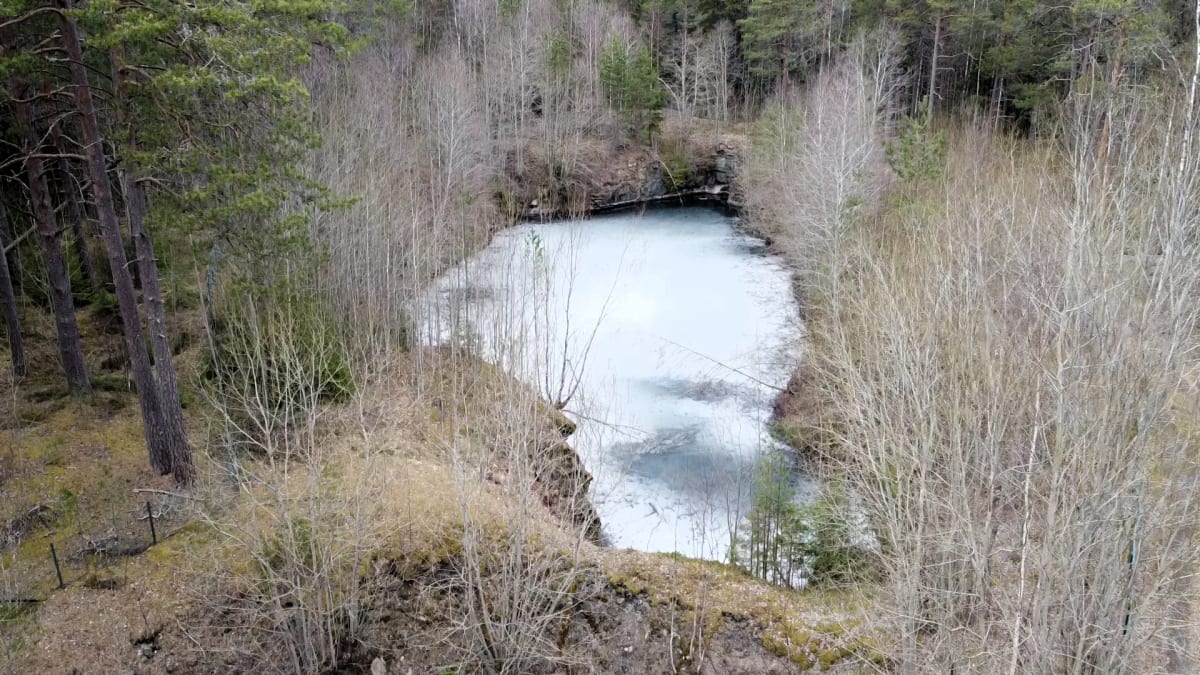
Nygruvan – Discovery and Early History
Nygruvan was discovered in 1680 by Sven Olofsson, the son of a miner from Gåsborn, with the aid of a mine compass borrowed from the mine master.
The new deposit was initially called Nya Pedersbergsgruvorna, but later received the name Nygruvan and belonged to the Högberg field. The mine was abandoned in 1875.
The Mechanical Pump Line of 1771
To manage water drainage, a 2,751-metre-long mechanical pump line was built in 1771, running from a pump wheel in the Yngshyttan river to Nygruvan. This installation was essential for pumping away water and keeping the mine in operation.
Horse Whim at Nygruvan (1683)
In the 1683 report, the mine master states that he had a horse whim constructed for Nygruvan. At the autumn assembly of the same year, the mine bailiff was ordered to procure a horse whim rope at Hennickehammar:
”… that the whim shall now without any delay be brought into operation.” (Persbergs Malmtrakt, Harald Carlborg, p. 242)
Note: Horse whim ropes at that time consisted of iron chains. They were so heavy that they were made strongest at the top and tapered towards the bottom in order to bear their own weight.
The Search for a New Parish Mine
When the Högberg mine was abandoned in 1674 due to difficulties with extraction and water drainage, a search began for a new parish mine.
(In a parish mine, extraction was organised collectively for the entire mining or bergslag district. It was later also referred to as an Odal mine.)
Hallgruvan (1674–1676)
A new ore seam was found at the Odal field, known as Hallan. After clearance and investigation the deposit appeared promising, and Hallgruvan was designated the new parish mine.
However, already by 1676 it became apparent that Hallgruvan did not meet expectations, and the search for a new parish mine continued.
Jordbergsåsen (1676–1679)
The choice fell upon the mines at Jordbergsåsen. The mine:
”Gave in 1678 a particularly promising sign of good and abundant ore.”
But the favourable conditions were short-lived. Designating Jordbergsåsen as the parish mine was considered bold, since extraction in certain parts had already been prohibited in 1672 on account of:
”degenerate and brittle”, red-brittle ore.
(Red-brittle ore contains sulphur, which makes the iron brittle and unsuitable for forging.)
In 1679 it was established:
”… contrary to many prohibitions it has been misused, such that innumerable quantities of poor iron are found to have been produced from it at various smelting works here in the bergslag…”
The bergslag was urged to choose a different parish mine. Once again they found themselves without a functioning principal mine.
The Solution – Nygruvan (1680)
In July 1680 a new ore body was found to the east of the Odal field. The deposit was initially called Nya Pedersbergsgruvorna, but later received the name Nygruvan and belonged to the Högberg field.
After the mine master had sought permission from the Board of Mines, Nygruvan was designated the new parish mine, providing the bergslag with a stable principal mine.

