Laddar...

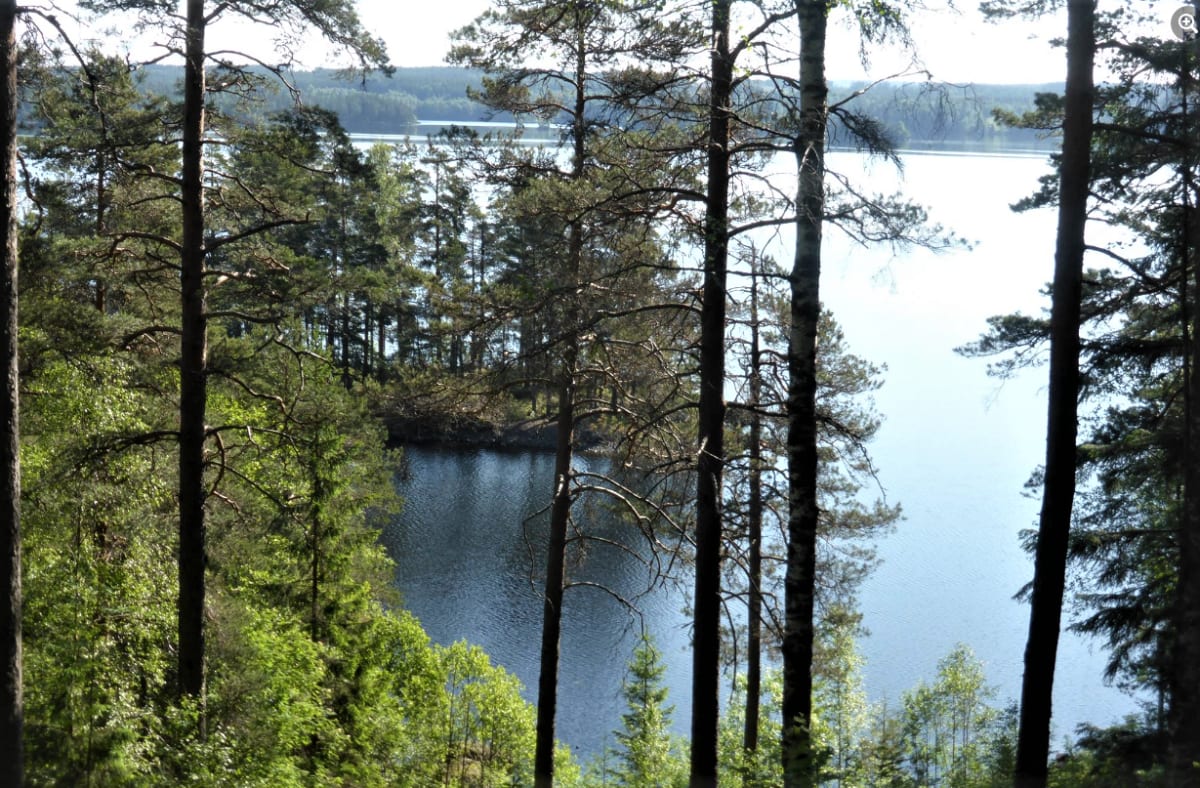
Morning at Vargkullen
Sitting here on an early summer morning, enjoying the first rays of sunshine, drinking your morning coffee and listening to the birdsong – that is actually perfectly fine.
View towards Kutviken
Below Vargkullen to the east you can see Kutviken. On the southern shore of Kutviken there are remains of an early loading place used for the shipment of ore from the Högberg field. You can follow the marked trail from Vargkullen down to Kutviken.
In Persbergs Malmtrakt, Carlborg mentions that the road down to the ore wharf in 1748 was in such poor condition that the ore carts could make their way along it only with great difficulty during summer.
- In summer: the ore was rowed from the shore to the various smelting works around Lake Yngen.
- In winter: transport was carried out by horse and ore sledge.
Kutholmen and the Borsholmar Islands
- The island outside Kutviken is called Kutholmen, where there is a small mine that was worked for a few years in the early 1860s.
- The two small islands approximately 2 km to the east on the lake are called the Borsholmar islands.
The Smelting Works at Lake Yngen
The house visible from Vargkullen on the eastern side of Lake Yngen lies approximately 200 metres south of Bornshyttan, one of the four smelting works that took their ore from the Högberg field.
The other three smelting works were:
- Torskbäckshyttan
- Åskagshyttan
- Gammalkroppa hytta
The Name Vargkullen
The name Vargkullen – varg meaning ”wolf” in Swedish, hence ”Wolf Hill” – which on the Lantmäteriet maps is referred to as Drakkullen (”Dragon Hill”), most likely comes from the local population. In Einar Juvel’s book, mention is made of Varg-Stina and her son Varg-Vilhelm, who lived in a small cottage north of Krakbogruvan. It is likely that the hill took its name from them.


