Laddar...

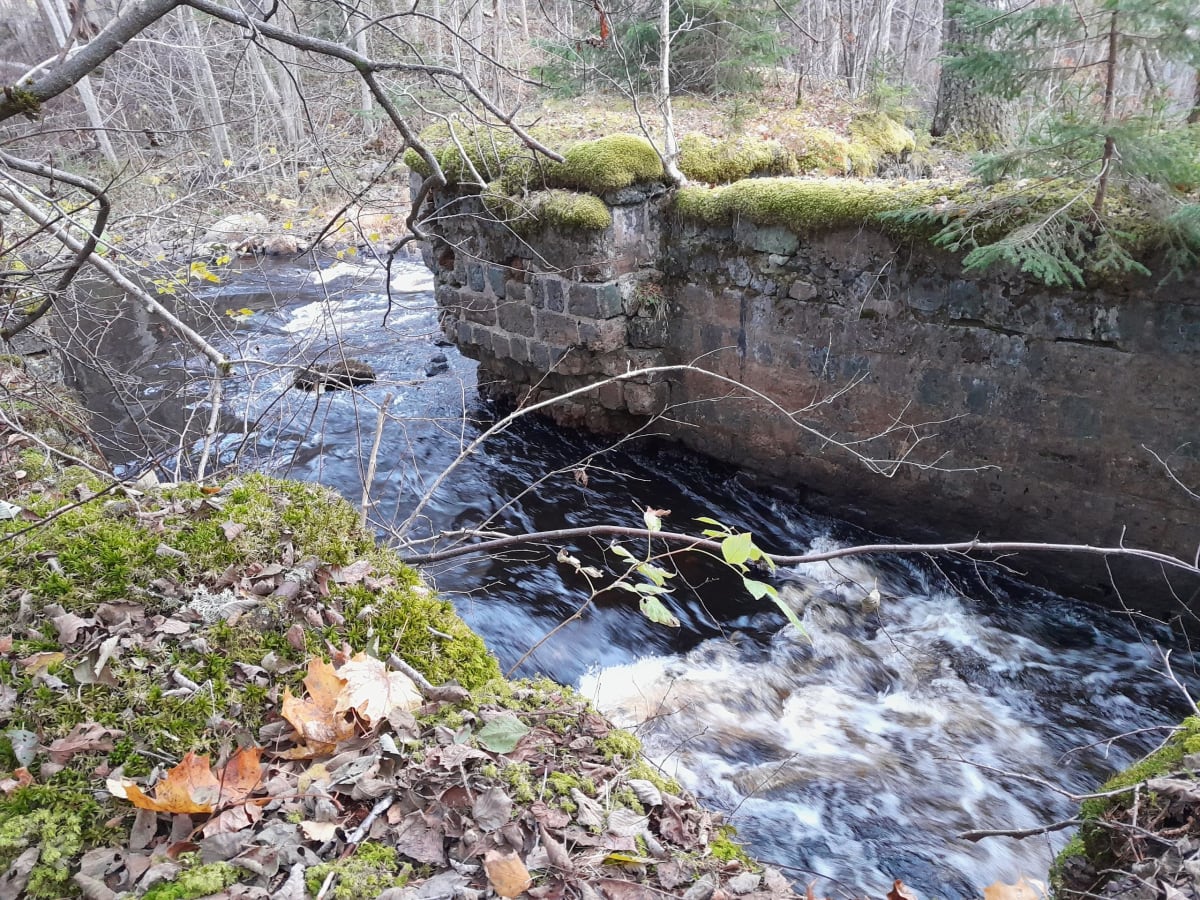
Finnmossen Mines Hoist – C. A. Ångström 1860
Construction and Power Source
The hoist was built by C. A. Ångström in 1860. Its power was provided by the existing waterwheel already in operation, which supplied the Finnmossen Mines with mechanical power.
Connection to the Waterwheel
To avoid interrupting the operation of the waterwheel, the hoist could be engaged and disengaged while running. Ångström used a friction clutch (D), which allowed the hoist to start smoothly and without jerks, unlike the more common pawl couplings of the time.
Hoist Line and Ore Drum
The hoist line from the waterwheel to the Finnmossen Mines was approximately 720 meters long. The ore drum descended under its own weight, and its speed was regulated with a brake on the hoist frame.
Further Documentation
A detailed description of the hoist, including drawings of the friction clutch and the brake system, is available in the supplementary texts.

