Laddar...

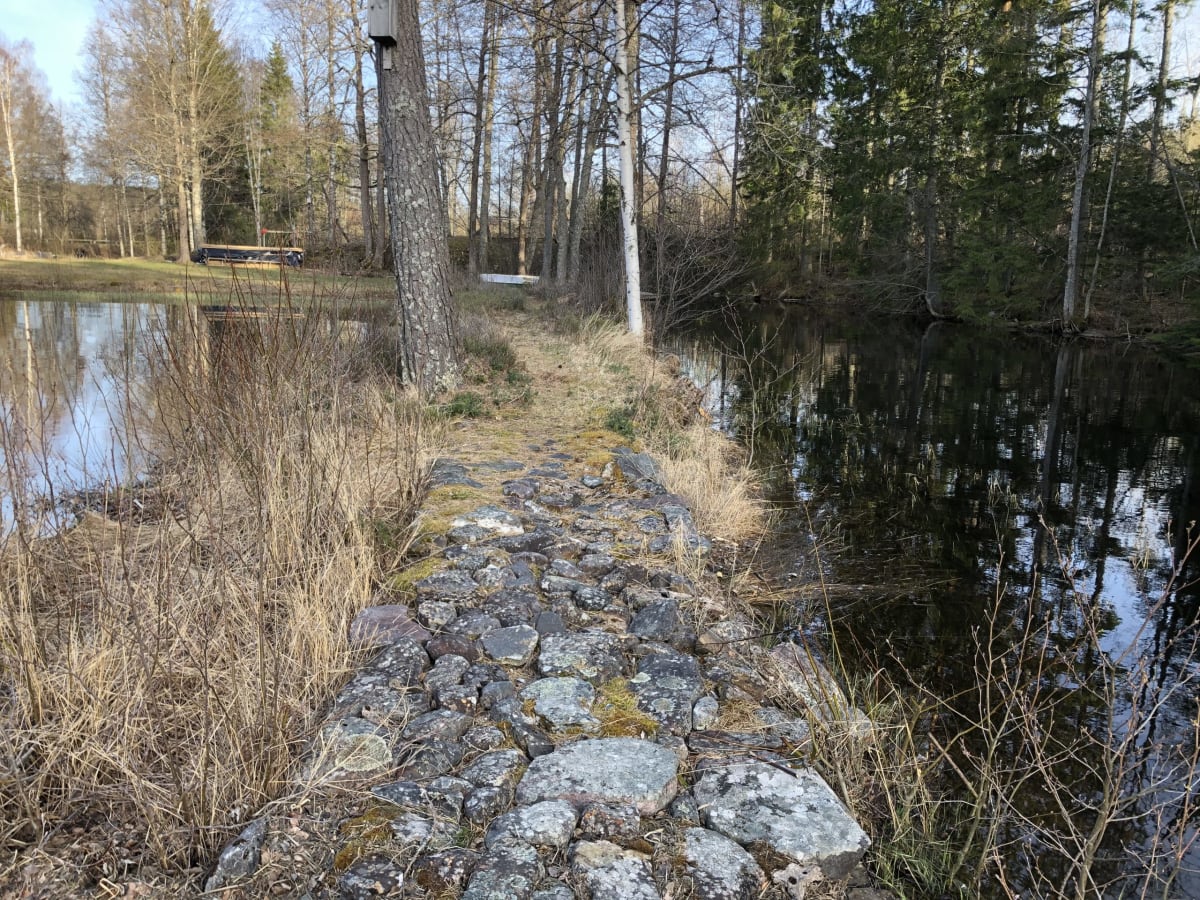
Transport Route via the Åskag Canal
I have not been able to find any information about when the Åskag Canal was constructed. However, it is reasonable to assume that the canal was opened shortly after Västra Åskagshyttan was closed in 1704, when the waterway into Lake Åskagen became free.
It must have been a considerable advantage to be able to transport the ore by boat directly to the ironworks and avoid reloading at the ore jetty by Lake Yngen.
Sale of the Canal
In the notice for the company meeting of 1862, it is stated that the canal would be sold to the highest bidder. There appears to have been little interest in taking over the canal, as the records show that the accounts ended on 17 June 1862.
One reason why the canal was put up for sale – and why there was little interest in it – may have been that operations at Östra Åskagshyttan ceased in 1860, after 300 years of activity.
Ore Transport
Most of the ore was probably transported during the summer across Lake Yngen and stored near Östra Åskagshyttan.
Ore destined for Svartsången, Skarphyttan, Finnhyttan, and further south through the Lokadalen valley was stored along the southern shore of Lake Åskagen, waiting for winter conditions.
Historical Note on Ore Transport
In his book “The Ironworks of Värmland”, Jalmar Furuskog mentions a Mining Master Kiällman, who in his reports describes a transport route between Persberg and Karlskoga. He writes:
“Karlskoga mining district transports the ore in winter one and a half Swedish miles to Bjurbäcken, and then in spring rows it to the nearest shore by the ironworks.”


