Laddar...

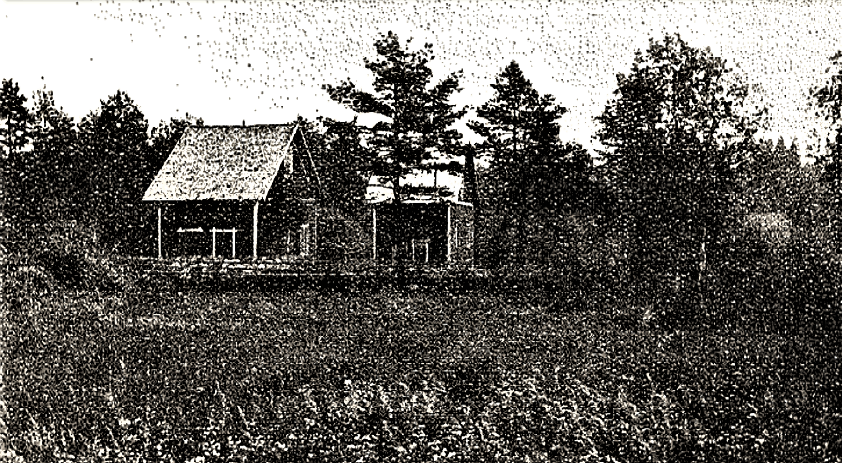
Photo: Harald Carlborg, 1923
Braskehjulet and the Högbergs Field
Braskehjulet and the water conduit to the Högbergs Field were completed and operational in November 1821. The conduit was connected via a turning point to the old Nygruve conduit, approximately 180 meters south-southeast of Finnhagen. Beyond the turning point, no visible remains exist, but it is easy to trace the conduit a short distance in the direction of Högberget.
Effect of Braskehjulet
With the construction of Braskehjulet, the conduit to Nygruvan was shortened by approximately 1,850 meters, a significant saving in both maintenance and transmission loss.
Braskehjulet supplied not only Högberget with water power but also, among others, Pumpgruvan, Östra Skogsbacksgruvan, and Flintkärrsgruvan.
At the waterfall, in 1859, a hoist wheel was built, which supplied, among others, the mines at Högberget with hoist power.
Important Note
The conduits were moved between different mines, particularly the smaller ones, according to need and profitability.
Images
7 imagesFrån tubintaget gick två tuber ner till hjulhusen, en till varje hjul.
Foto: Torbjörn Nordwall
Järnringarna visar tubens dragning ner mot hjulet.
Foto. Torbjörn Nordwall
Utloppskanalen mot vänster.
Foto. Torbjörn Nordwall
Norra hjulgraven.
Foto. Torbjörn Nordwall
Ett stenlager från nått av hjulen.
Foto. Torbjörn Nordwall
Strax nedströms Braskefallet fördelades vattnet mellan Storgruvefallet, kanalen uppe till höger, och Risfallet, uppe till vänster. Nere till vänster mynnar sidotappningsvägen från Persbergs kanal.
Foto: Torbjörn Nordwall.
År 1843 Hjulhuset drabbat av ”vådeld”.
Dokument: Värmlandsarkiv

