
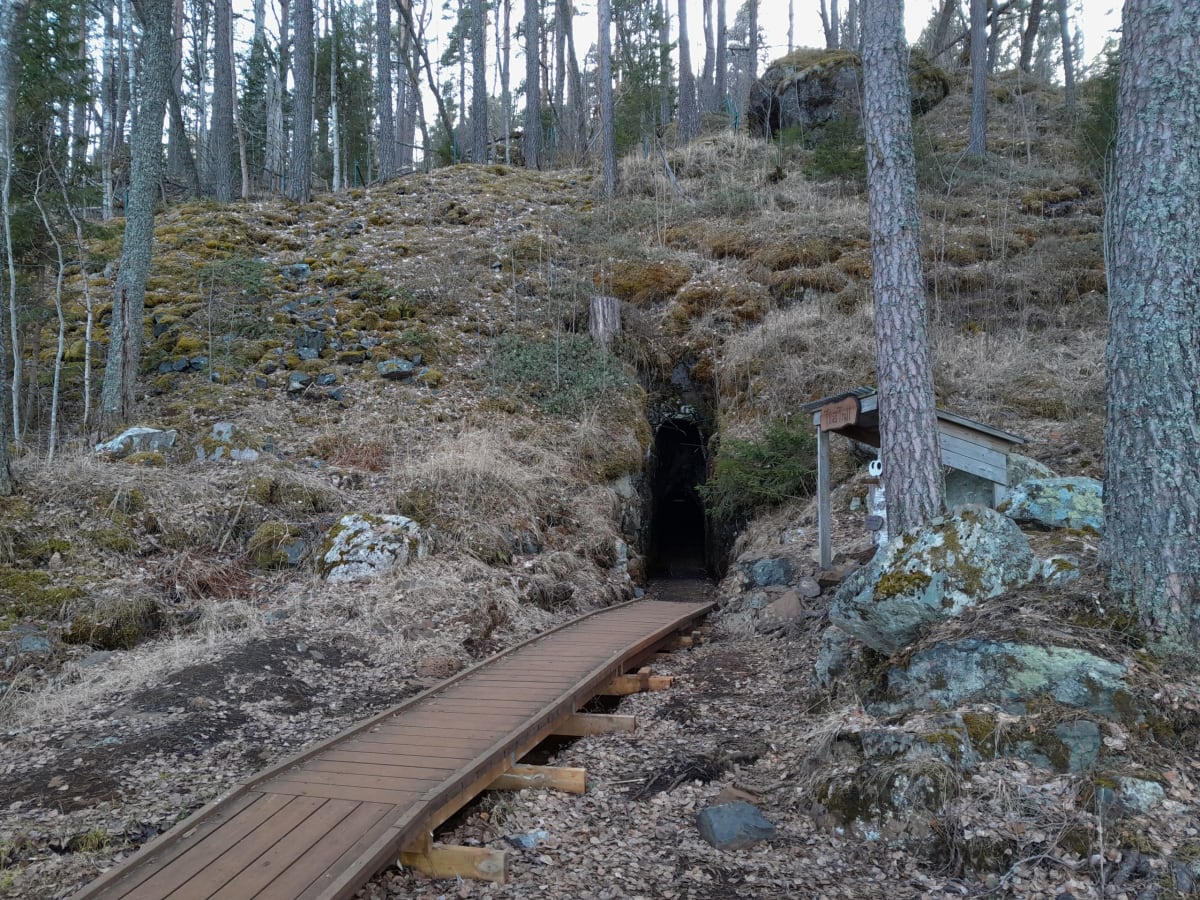
Säkerhet i Tilas stoll och Krakbogruvan
Var försiktig när du går in i gruvan och lämna inte gångbron. Det är inte fast botten bredvid bron utan endast en planktäckning.
Som framgår av profilkartan (bild 11) är det cirka 50 meter ner till gruvans botten från bron.
Tilas stoll
Stollen har fått sitt namn efter bergsrådet
Daniel Tilas
(f. 1712, d. 1772).
Tilas var en framstående man som förärades många titlar: Bergsråd, Riksheraldiker, Friherre, Genealog, Titulär Landshövding samt Riddare av Kungliga Nordstjärneorden.
Några uppdrag i hans liv
-
1737 – deltog i projektering av en kanalbyggnad i Finland.
-
1738 – reste på Bergskollegiets uppdrag till Ryssland för att studera bergverken runt Onegasjön.
-
1741–1745 – deltog i Gränskommissionens arbete med att fastställa gränsen mot Norge.
-
1761 – föreslog Kongs Collegiet att tillstyrka byggandet av en såg för Persbergs gruvor i Yngshytteälv.
-
1768 – var ciceron åt kronprins Gustaf under dennes resa till bergverken i Bergslagen. Den 25 september anlände sällskapet till Persbergs gruvfält där kronprinsen bland annat fick se en demonstration av den då unika ”Eld- och Luftmaskinen”.
Den höga takhöjden i stollens början
Den höga takhöjden i början av stollen har väckt frågor. Förklaringen är att man efter några års arbete – år 1769 – insåg fördelen med att sänka stollens sula till sjön Yngens högsta nivå.
Eftersom uppfordringen skedde med hand- och hästvindar, innan vattenkraften fanns att tillgå, var varje meter minskad uppfordringshöjd av stor betydelse.
På äldre kartor kan man se att stollen användes för utfrakt av malm. Den tjänade naturligtvis även till att avleda det uppumpade gruvvattnet ut i sjön.
Finansiering av arbetet
I Persbergs Malmtrakt skriver Harald Carlborg:
”Tilas stoll i Högberget torde varit det första gemensamma arbetet, som utfördes med gruvfondkassans medel, ty redan 1760 beslöts att på så sätt framdriva den en famn om året, sedan de medel, som erhållits genom försäljning för gemensam räkning av en nyupptäkt fyndighet, Rudbecks gång, blivit förbrukade.
I själva verket hoppades man, att »med tiden varder gruvefonden så tilltagande, att den själv kan underhålla stollen och på rent köp såsom stollnär försälja de yppade malmgångar«.
Emellertid visade sig tyvärr Tilas stoll som affärsspekulation vara alldeles misslyckad.”
(1 famn = 1,78 meter)
Uppgifter ur ”Utdrag af Relationerna om Filipstads Bergslags grufvor …”
1760
Kommissionen föreslog att uppta en stoll – den så kallade Tilas stoll – för undersökning av Högbergets malmfält.
1762
Markplanering krävde inte gruvvant folk, men vanliga arbetare var dyrlejda eftersom Filipstad återuppbyggdes efter branden.
”Därföre uppskof.”
1767
En bergpall undanbröts framför munlocket. Arbetet fortsatte därefter med gruvdrängar från Sala.
1768
Rödhälleflinta försvårade arbetet.
Sulan hade då drivits 4 famnar (ca 7,1 m).
1769
Sulan sänktes till Yngens högsta nivå, totalt 2 alnar (ca 1,18 m).
1772
En notering finns om snatteri av tillmakningsved vid Tilas stoll.

