Laddar...

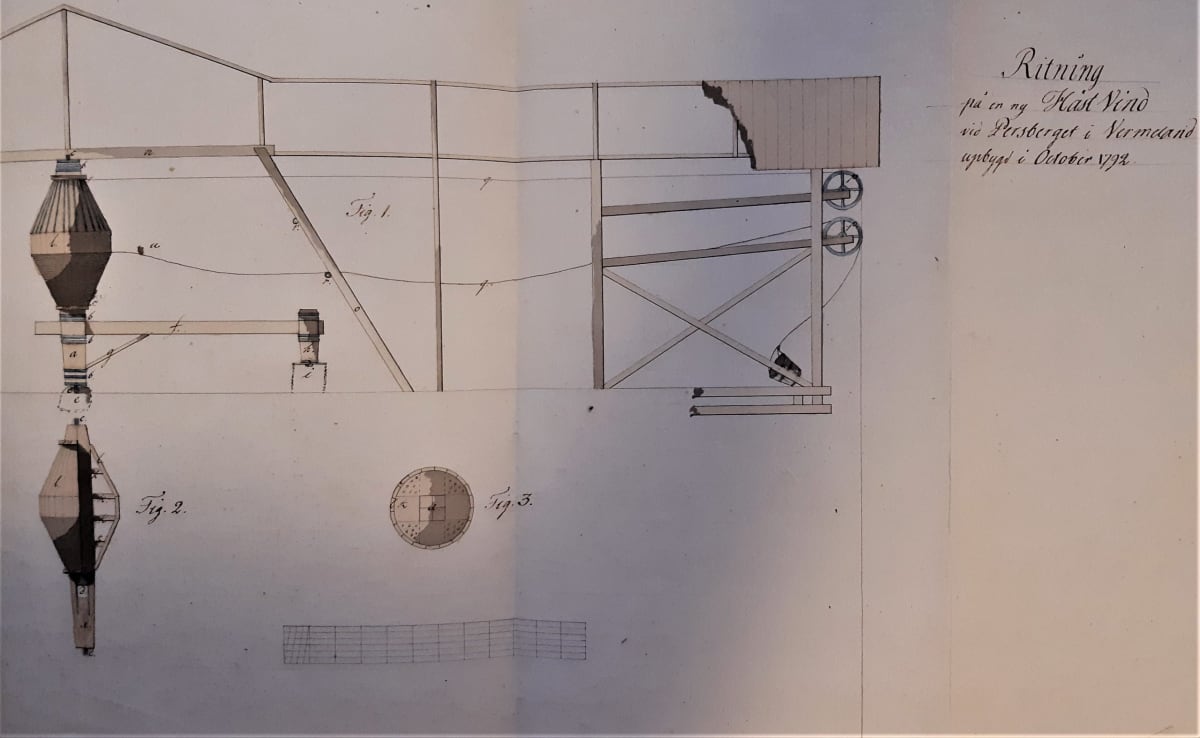
Hästvindar i Persberg
I Persberg hade all uppfordring fram till år 1719 skett med handvindar. Därefter fanns tre hästvindar uppsatta.
Hästvindarna kom under många år att vara den effektivaste berguppfordringsanordningen och användes vid flera mindre gruvor ända fram till omkring år 1900.
Johan Blåders minnen (intervju 1962)
I en intervju från 1962 berättar Johan Blåder (född 17 september 1876 i en jordkula vid Norra Hammarrepet, Persberg) om sin uppväxt och om livet vid gruvorna.
Vid 14 års ålder började han arbeta som ”vindkörerpojke”, vilket han själv beskrev som det sämsta arbete man kunde ha.
Han körde hästvinden vid Lyckfallet, troligen vid Bolandsgruvan. För varje tunna som kördes gick hästen och ”vindkörerpojken” 18 varv. Berg kördes dagtid och vatten nattetid.
Blåder berättar att hästarna ofta var besvärliga att köra. De trivdes inte med det hårda och monotona arbetet. Värst var de kalla vinternätterna:
”Då kunn dä va så kallt så att dä smälld i lufta.”
Disponent H. V. Tiberg om hästvindar (1898)
År 1898 skriver disponenten H. V. Tiberg följande om hästvindar:
”Gränsen för hästvinds användning ligger, då en häst begagnas, vid en uppfordringskvantitet af omkr. 125 tonsättningar pr dag, motsvarande t.ex. en uppfordring af 25 ton berg och vatten från 5 sättningars djup, och då två hästar användas vid dubbla kvantiteten. Vanligen är nettolasten inemot eller omkring 1/2 ton och uppfordringshastigheten 0,16 m i sek., och om man efter den uppkörda bruttovikten beräknar det arbete hästen utför, finner man det uppgå till 1,6 ända upp till 2,3 hkr., oberäknat friktionen och kraftförlusten vid själfva hästvinden.”
(1 sättning ≈ 10 meter. TN)
Avskrift ur: Wermländska Bergsmannaföreningens Annaler, år 1898.
Januari 2025, TN.
Tidiga uppgifter om hästvindar (1683)
Harald Carlborg skriver:
”I 1683 års relation förmäler bergmästaren, att han låtit förfärdiga en hästvind till Nygruvan och vid samma års höststämma fick gruvfogden order att beställa en hästvindslina vid Hennickehammar, så ‘att vinden nu utan all dröjsmål till gångs kommandes varder’.”
Detta visar att hästvindar användes i området redan under 1600-talet.


