Laddar...
Storgruvans konsthjul
 Waterwheel
Coordinates: 59.75540, 14.24816 (WGS84)
Konstens längd: 1490 m.
Byggt år: 1752.
Byggt år: 1752.
Konstens längd: 1490 m.
Byggt år: 1752.
Byggt år: 1752.
Great Mine Waterwheel built 1752
Location and Remains
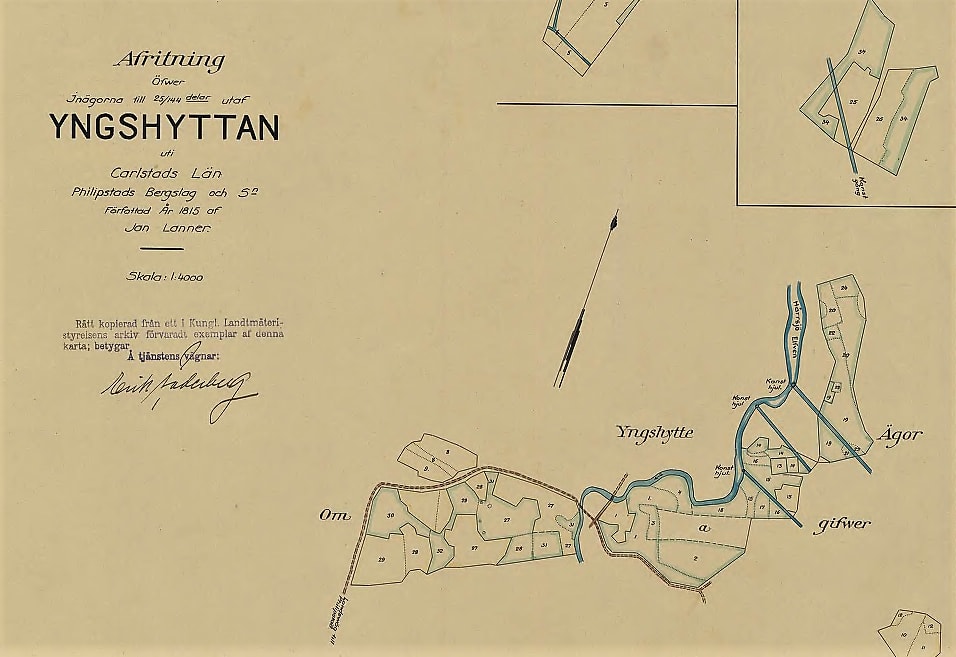
No remains of the wheel pit for the Great Mine waterwheel can be found. About ten meters east of the Yngshytte River, one can see where the rod system ran on its way to the Great Mine. The fall at Gubbdammen was previously used for the operation of Önshyttan.
Challenges with Water in the Mines
The 1702 reports note that the Great Mine was worked by 13 men, but:
”The water takes over although handpumps are installed.”
In the same year, Badstu and Kammargrufvan north-west of the Great Mine were ”offended by the excessive water.” In Carlsgrufvan, a tread-operated pump was used daily by six people, while Dalarna workers dug a large ditch.
By 1704, the Norra Kärrgrufvan of the Great Mine field had:
”The water causes much expense, but even more in Södra Kärrgrufvan, where 12–14 people daily must laboriously keep the water out with handpumps.”
These accounts show the difficulties of keeping the mines free from water with the tools available at the time.
Construction of the Waterwheel System
Convincing the various stakeholders at Persberg mines to finance a waterwheel was nearly impossible. In 1751, the Mining Inspector managed to persuade them:
-
Mine owners contributed 6,000 copper daler
-
Miners 56 daler Smnt per smelter
-
15 miners also contributed
Bergs-Collegium allowed 900 trees to be taken from the Dal Forests.
Operation of the Waterwheel
The waterwheel stood in the Yngshytte River, 797 fathoms from the mine, and was completed in 1752. It started operation in October but had to stop after a month due to cold. In spring 1753, operations resumed, but the wheel’s power was insufficient to drain all mines, as water levels were interconnected.
To work Krangrufvan, an arm and rod system was attached to the Great Mine waterwheel. By Midsummer, it was ready, allowing work in Krangruvan to begin in September.
In 1754, another arm was built for Kran- and Baggegrufvehalsarna. Despite this, the system lost efficiency at the Great Mine. When the wheel was stopped in November, the water had been lowered to 30 fathoms from the Great Mine floor, and to the same level in Spensens ort, Kammargrufvan, and Stora Kåfven.
For Brickegruvan, 15 fathoms of water still needed to be lowered. Winter operation was considered impossible, and a waterwheel master was employed with salary from Bergs-Collegium.
Costs
The waterwheel cost the mine owners and miners over 30,000 copper daler

