Laddar...

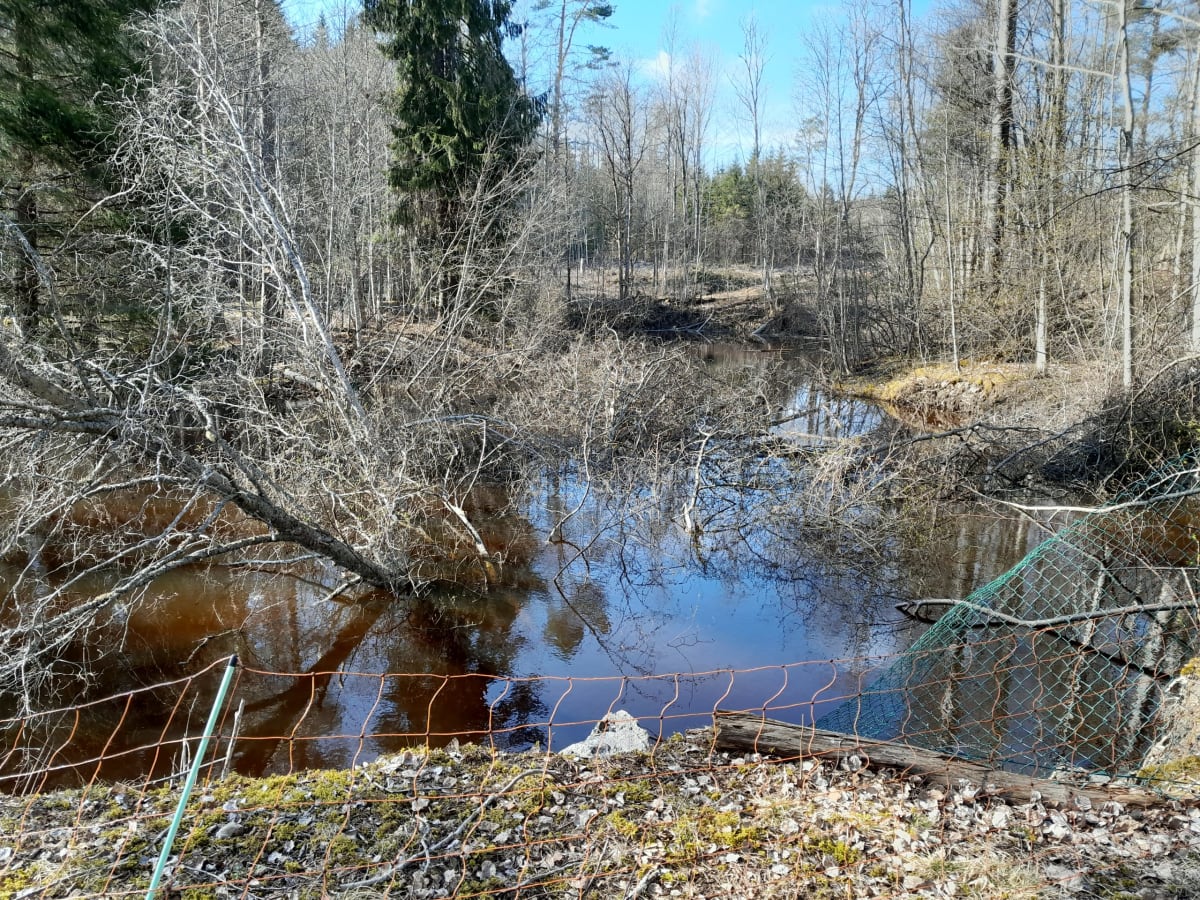
Lindbergshage Mine
The Mine and Its Difficult Conditions
A mine that was worked under great difficulties due to poor rock quality, with constant cave-ins and a heavy inflow of water.
In 1859, a major collapse occurred, making it necessary to sink a new shaft. Shaft sinking began immediately, and in the summer of 1864 breakthrough was achieved to the previously collapsed section of the mine.
If you follow the attached link, you will find interesting reading in which Anton Sjögren describes the challenges that had to be solved during the reinforcement timbering required to prevent further cave-ins.
Water Power and Closure of the Mine
In 1852, the mine received mechanical power from the waterwheel south of Gubbdammen.
In 1862, the new Lindbergshagefallet was taken into operation, after which the mine received both hoisting power (“spel”) and pumping/mechanical power (“konstkraft”) from there.
The mine was closed in July 1871. The increasing inflow of water and the large consumption of timber were the main reasons for its closure.
At the time of closure, the mine had reached a depth of 142 metres.
The Hand-Powered Windlass (1862)
Below follows a description of a hand-powered windlass constructed in 1862 by L. M. Larsson. The windlass was acquired to facilitate the extensive construction work (images 2 and 3) that supported the collapse-prone rock in the mine.
Excerpt (translated from older Swedish):
“For lowering timber into the Lindbergshage mine, I prepared drawings for a hand-powered windlass, which, having proven suitable, deserves brief mention.
The construction is generally similar to an ordinary windlass with double gearing. The first shaft, fitted with a crank at each end, can be moved back and forth in its bearings so that it engages or disengages with the gear wheel on the intermediate shaft.
Cast onto this gear wheel is a brake disc, 3 feet in diameter and 4 inches wide.
The rope drum has centres, arms, and rings made of iron, with a toothed ring of 3 feet diameter cast onto one side ring, and a wooden track, also 3 feet in diameter, allowing the use of a fine-stranded iron wire rope, which to date has proven fairly durable.
In operation, the timber is first wound out over the mine opening, after which the crankshaft is disengaged and the lowering is carried out solely by means of the brake, which can easily be handled by one man.”
(Transcript from the Annals of the Swedish Ironmasters’ Association.)


