Laddar...

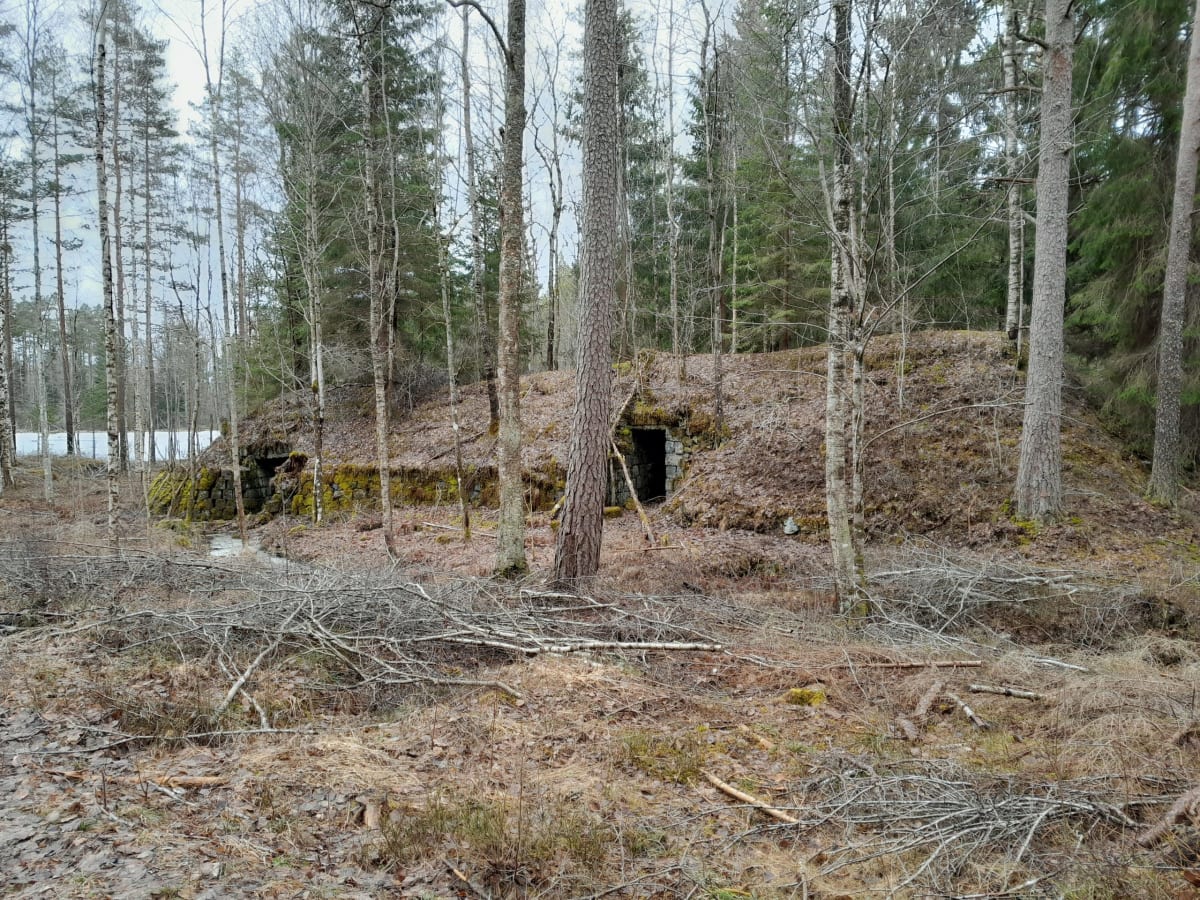
Founding and Early History
- The factory was founded by Sebastin Aktiebolag, Stockholm, in 1874, at a time when Nobel’s patent on Guhr dynamite was beginning to be challenged throughout Europe.
- At Persberg, Nobel’s patent was circumvented by replacing kieselguhr as the absorbent with an explosive mixture of nitrocellulose and wood flour, together with ammonium nitrate and nitrobenzene. This formed the basis for the more powerful Persberg dynamite.
- In 1875, the factory was taken over by mine owners in the Filipstad Mining District.
- Engineer and manager: Johan Algot Törneman.
- Törneman also invented a fuse tube and transferred the patent to the factory.
The factory was located at Gubbdammen because of its secluded location and proximity to the railway, but the nearby Yngshytteälv, which ensured access to process water, probably also played an important role in determining its location.
Legislation and Transport of Nitroglycerin
- In 1868, a ban was introduced on the trade and transport of nitroglycerin.
- In 1870, Nora-Gyttorp Krutbruk was granted an exemption allowing the annual transport of 12.6 tonnes of liquid nitroglycerin to several mines, on the condition that the nitroglycerin was mixed with at least 2% benzine or nitrobenzene.
- Nora-Gyttorp Krutbruk designed two types of wagons for the transport of nitroglycerin:
- Large oil wagon: 2 horses, load capacity 340 kg
- Small oil wagon: 1 horse, load capacity 210 kg
- The wagons were specially designed for transporting explosives, with soft suspension and a ratchet brake (parking brake).
- The permit was extended until 1899.
- In 1875, the Persberg Explosives Factory was granted permission to transport nitroglycerin within Färnebo District.
Resistance to Dynamite
- Mining interests in the mining districts of Värmland were reluctant to replace blasting oil with dynamite.
- In 1871, negotiations were held with Nitroglycerinbolaget regarding the production of nitroglycerin from dynamite in order to circumvent the transport regulations.
Dynamite and Production
- Persberg Dynamite of the extra-dynamite type contained nitrocellulose, wood flour, ammonium nitrate, nitrobenzene, and approximately 53% nitroglycerin.
- Pre-loaded charges made of moist plastic clay were manufactured for a period of time – they saved time and were popular among the miners driving headings.
- Production during the 1920s:
- Annual production: 40 tonnes
- Production came to a complete standstill from 1924 to 1926.
- In 1929, Nitroglycerin Aktiebolaget took over deliveries to the factory, with the long-term aim of closing the factory.
- In order to retain the manufacturing rights, a symbolic 10 kg of dynamite was produced each year using raw materials from Gyttorp.
1918–1920: Cooperation and Expansion
- In 1918, the Swedish Explosives Association planned to take over the factory.
- Bofors Nobel Krut regarded this as a threat and initiated negotiations.
- In 1920, an agreement was reached on close technical and financial cooperation.
- The factory’s capacity was expanded, and for a period Bofors supplied powdered explosives (“Stjärnnobelit”).
Early Experiments with Nitroglycerin
- In the autumn of 1865, experiments were carried out at the Persberg mines, documented by Mr. Sundberg, an official of Jernkontoret.
- Nitroglycerin proved more effective than gunpowder, which reduced mining costs and was appreciated by the workers despite the dangers.
Sobrero’s Nitroglycerin and Alfred Nobel’s Early Experiments
- 1847: Professor Sobrero, Turin, invented nitroglycerin.
- 1850s: Imanuel Nobel, Alfred Nobel’s father, began experiments – unsuccessfully.
- 1862: Alfred Nobel developed a method for controlled detonation using a gunpowder detonator.
- 1863: First successful blasting operation using blasting oil.
- 1867: Alfred Nobel patented Guhr dynamite, a safe and malleable nitroglycerin compound mixed with kieselguhr.
Sources
- Josefin Sabo: Regulated Explosive Power – Dynamite, the State, and the Swedish Civil Explosives Industry 1858–1950.
