Laddar...

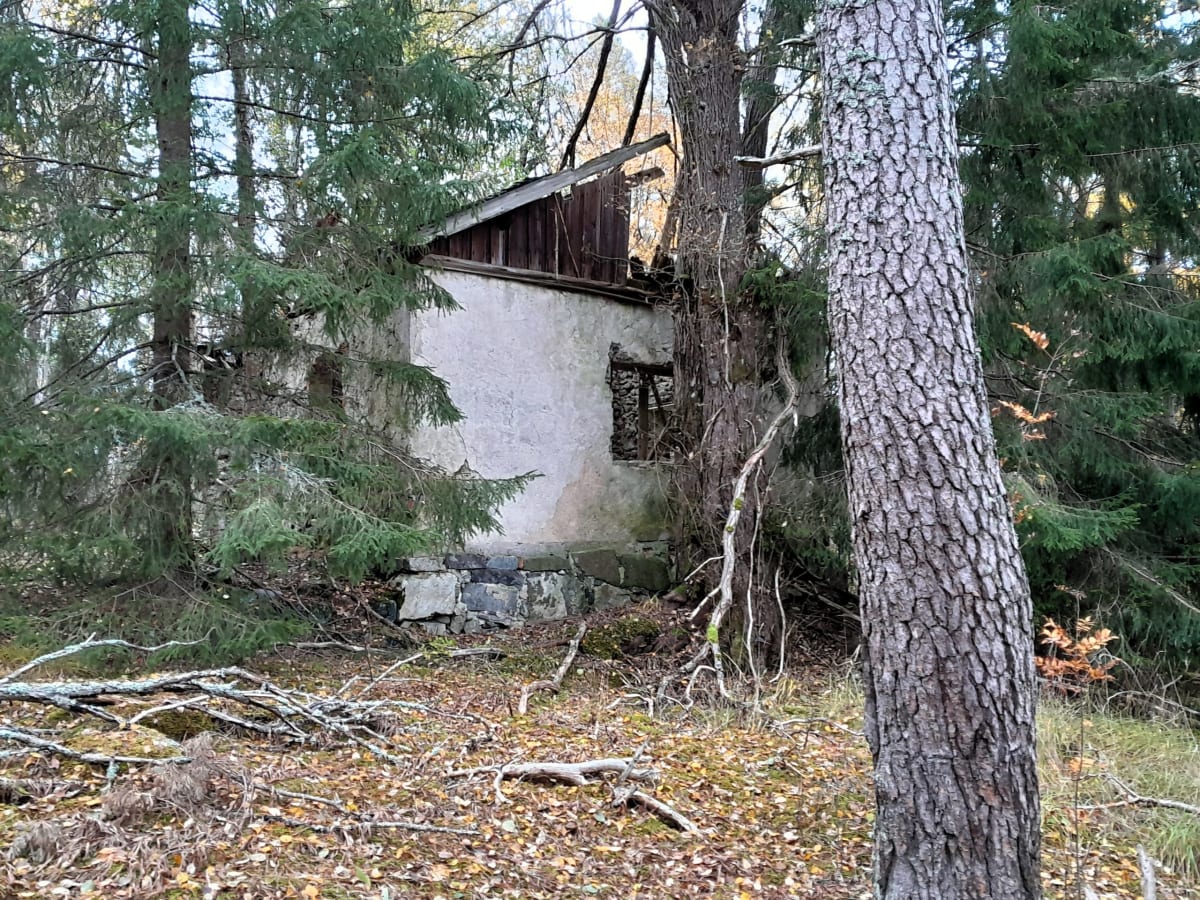
Mining Cottage and Residential House
The house, built of slag fragments, contained rooms and a kitchen and was likely used as a residence and mining cottage.
-
Roofing: slate tiles
-
Exterior dimensions: approx. 9.3 m × 6.2 m
-
Wall thickness: approx. 0.5 m
-
Kitchen: 18 m²
-
Room: 23 m²
(Images 6–7)
This was probably a house with two apartments, with the chimney wall in the middle. The foundation measures approximately 9.9 m × 6.7 m and is made of sinner stone.
It may be the house mentioned in a board protocol from 1899, where it was decided to construct a residence for the engineer and foreman. The building was to contain two apartments with rooms and kitchen, possibly with a gable room.
Sinner stone, also called bergslags stone, slag stone, or slag brick, was a commonly used building material in areas with smelting operations.
Before slag bricks were manufactured by pouring slag into molds directly from the blast furnace, the slag was allowed to flow out onto the furnace floor. Once cooled, it was broken into pieces. The broken slag was transported and tipped into large slag heaps. From these heaps, slag fragments of suitable size were collected for building houses. The material was masoned with lime mortar and was an inexpensive building material.


