Laddar...

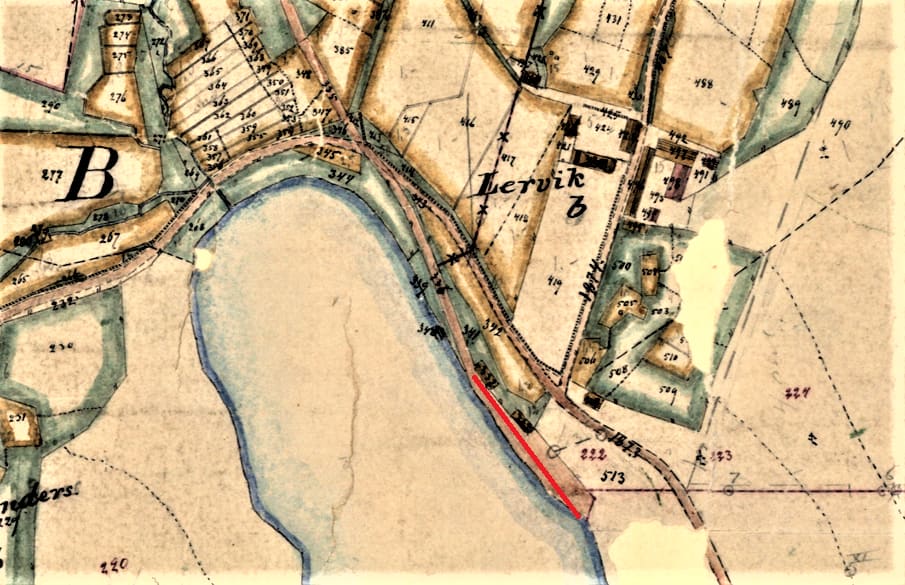
The red marking on the map shows the loading site at Lervik.
Lerviks Loading Dock
Ore Transport from Lervik
Before the Lervik–Saxå Railway was built, several ore piers existed at Lervik. From these piers the ore was transported further by pack horses, or during winter by horse-drawn sledges, across to the lakes Saxen or Långban. From there the ore continued to the various ironworks.
Rowing Transport on Lake Yngen
When the rowers left the pier at Lervik, many hours of hard work lay ahead before they reached the piers on the western side of the lake.
After rowing about 3 km, they reached Kviviken, which was the last opportunity to rest before rowing out onto the open lake.
The name Kviviken may possibly come from the idea that the rowers “lamented” or “groaned” there before continuing their heavy rowing out onto Lake Yngen, often facing strong south-westerly winds.
If the destination was Vinternäset, about 7 km of rowing still remained before reaching the pier.
Disponent Uhr’s Cargo Boat
According to preserved freight documents, Disponent Uhr’s cargo boat operated in the northern parts of Lake Yngen. No voyages to the southern parts of the lake have been found in the records.


