Laddar...

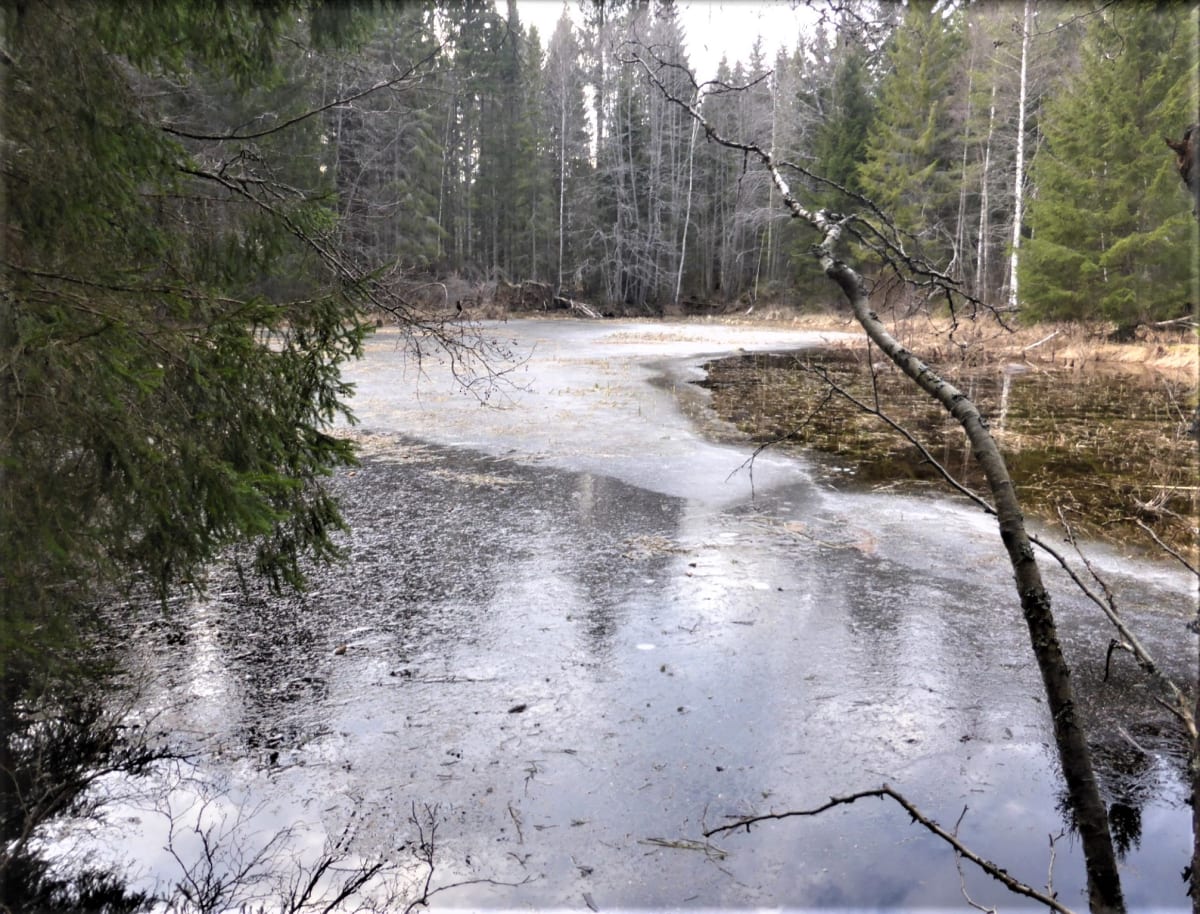
After the canal regulation in 1860, Sågfallet was renamed Kvarnfallet.
History before the regulation:
Until the 1860s, there was a hoist and a water wheel at Sågfallet. These were replaced during the regulation by a water wheel at Jordåskärret, which received its water via a pipeline from the canal just upstream of the waterfall.
Relocation of the sawmill:
As the name suggests, there was a sawmill at the waterfall. During the regulation, it was moved down to the fall north of Krangruvan. Most of the timber arrived via Yngen Lake, so the new location greatly facilitated transport to the sawmill.
Conduit to Guldkakegruvan:
The conduit shown on the proposal map for the canal, from a wheel at Sågfallet to Guldkakegruvan, has left no remaining traces.
Relocation and modernization of the mill:
The mill previously located north of Krangruvan was moved to Sågfallet, which then received the name Kvarnfallet. In 1920, the mill’s water wheel was replaced with a double turbine of 64 hp from Aktiebolaget Finnshyttan. It powered the modernized mill and a 65 kVA, 2000 V generator. The station normally delivered about 37 hp, a valuable addition to the mining field.
Kvarnfallet Power Station – Technical Data
-
Owner: Persbergs Grufve AB
-
Construction Year: 1920-21
-
Catchment Area: 40 km²
-
Utilized Flow: 0.6 m³/s
-
Head: 6.5 m
-
Turbine: Finnshyttan, 1 Francis, 2 wheels, 64 hp
-
Generator: 3-phase, 50 Hz, 2000 V, 65 kVA
-
Peak Load 1929: 35 kW
-
Production 1929: 60,258 kWh
Data sourced from Kommerskollegium / “Sveriges utbyggda vattenkraft år 1930” / Åke Johansson, Hammarö.

